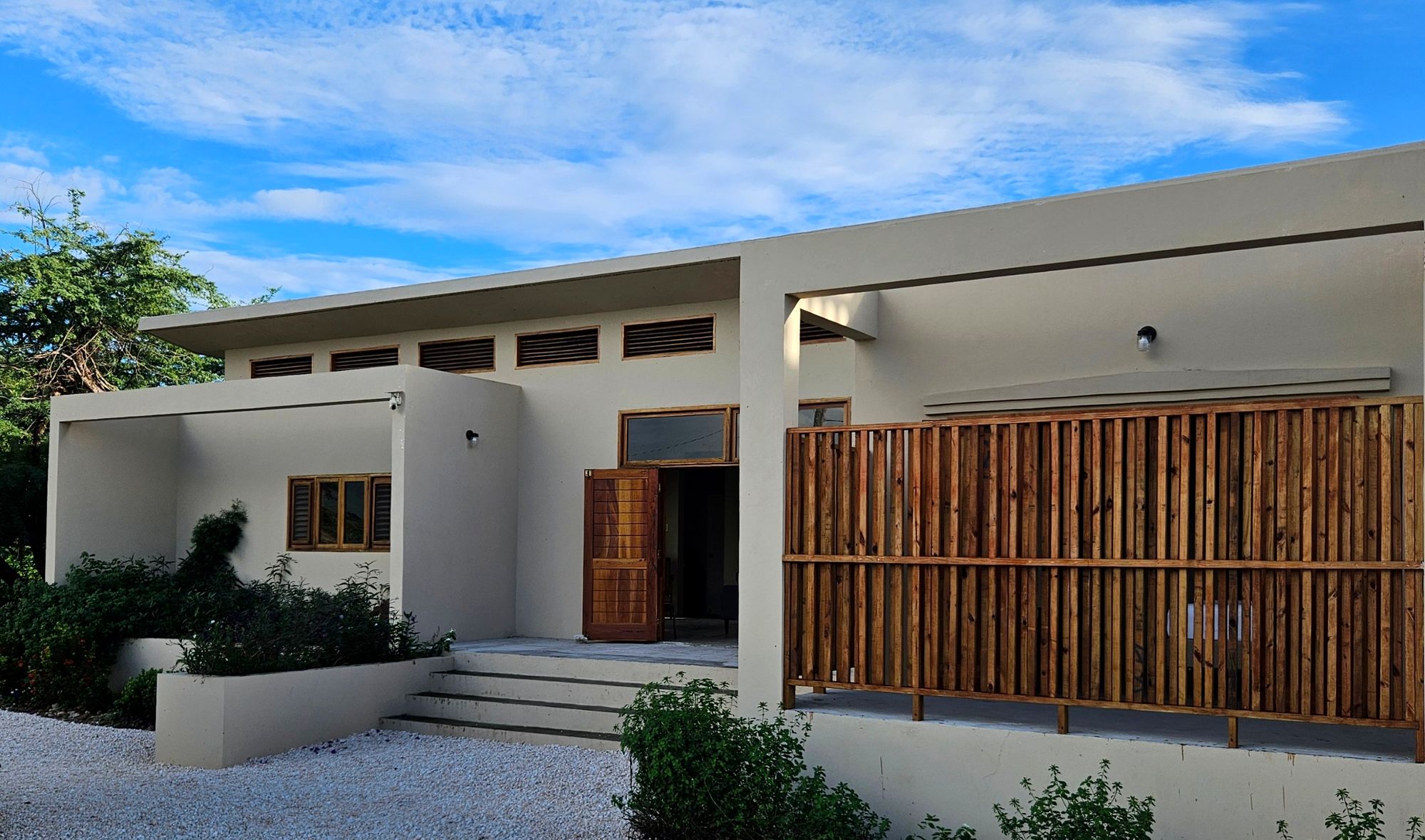
The Land
Treasure Beach · St Elizabeth · Jamaica
For ten years it had no name. The children just called it the land.
How it got its name
For ten years this was a piece of ground and nothing else. Thorn scrub, pale stony ground, a stand of acacia, and a long view across to the hills.
We would come on our own family vacations to Treasure Beach, and the question was always the same. Are we going to the land?
Not the plot. Not the site. The land. It became a proper noun somewhere around the third visit, the way these things do with children, and it stayed one.
Then we built a house on it, and spent a long time trying to think of what to call the house, which was absurd. It had been named for ten years already.
Design with us
The house is finished and it has been lived in. Our own family has been using it for a while now, working out where the light falls and which door you leave open. What it has never been is let.
So there is no review history, no guest book, and nobody outside the family who has formed a view about any of it. Those things get written by whoever comes first.
The first twelve stays go at a rate well below what this house will carry once the design journey is locked in, and we would love a piece of your own vision to form part of how the story evolves.
A house named by children ten years before anyone built on it was never going to be finished by its owners alone.
The house
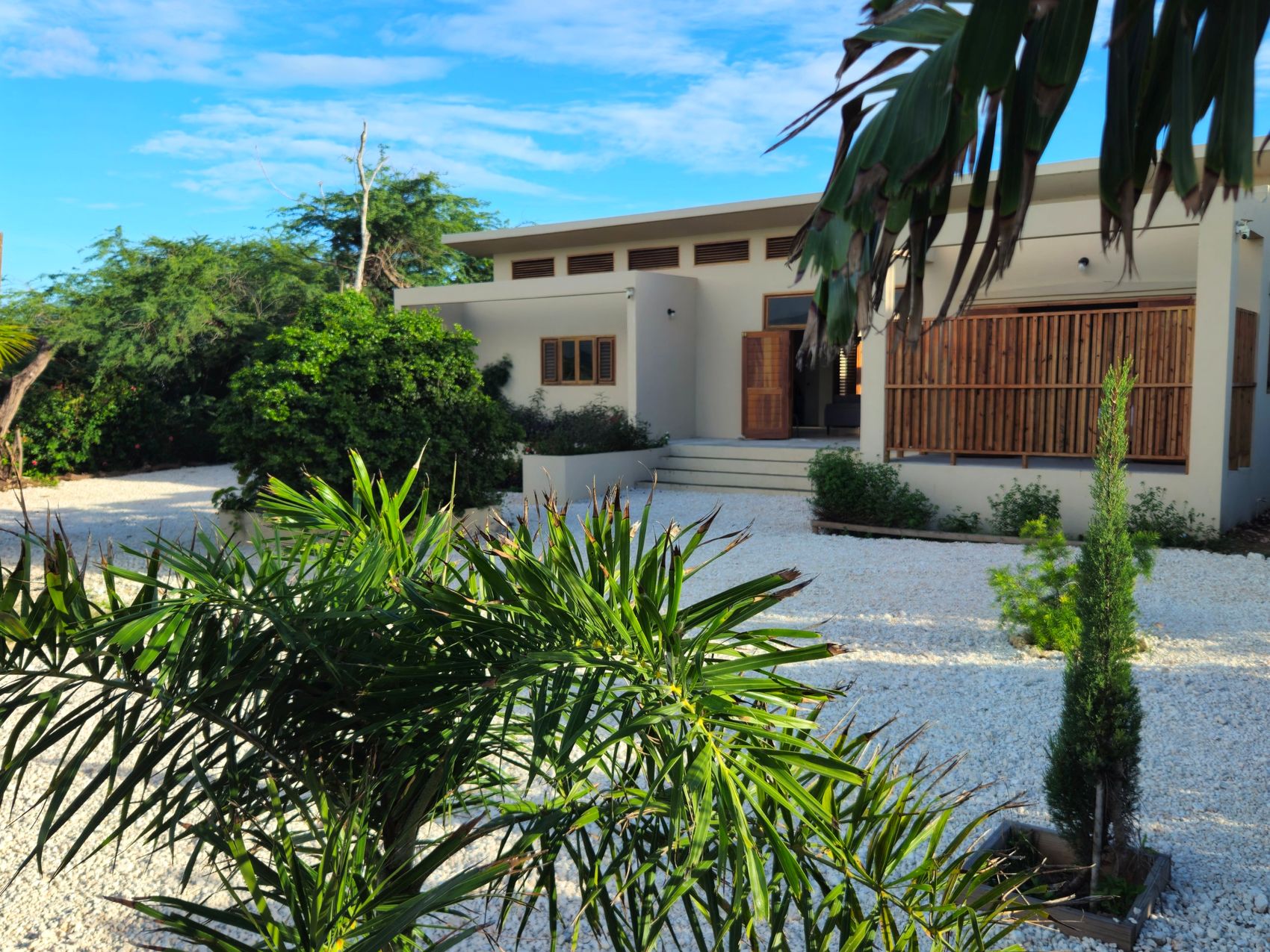
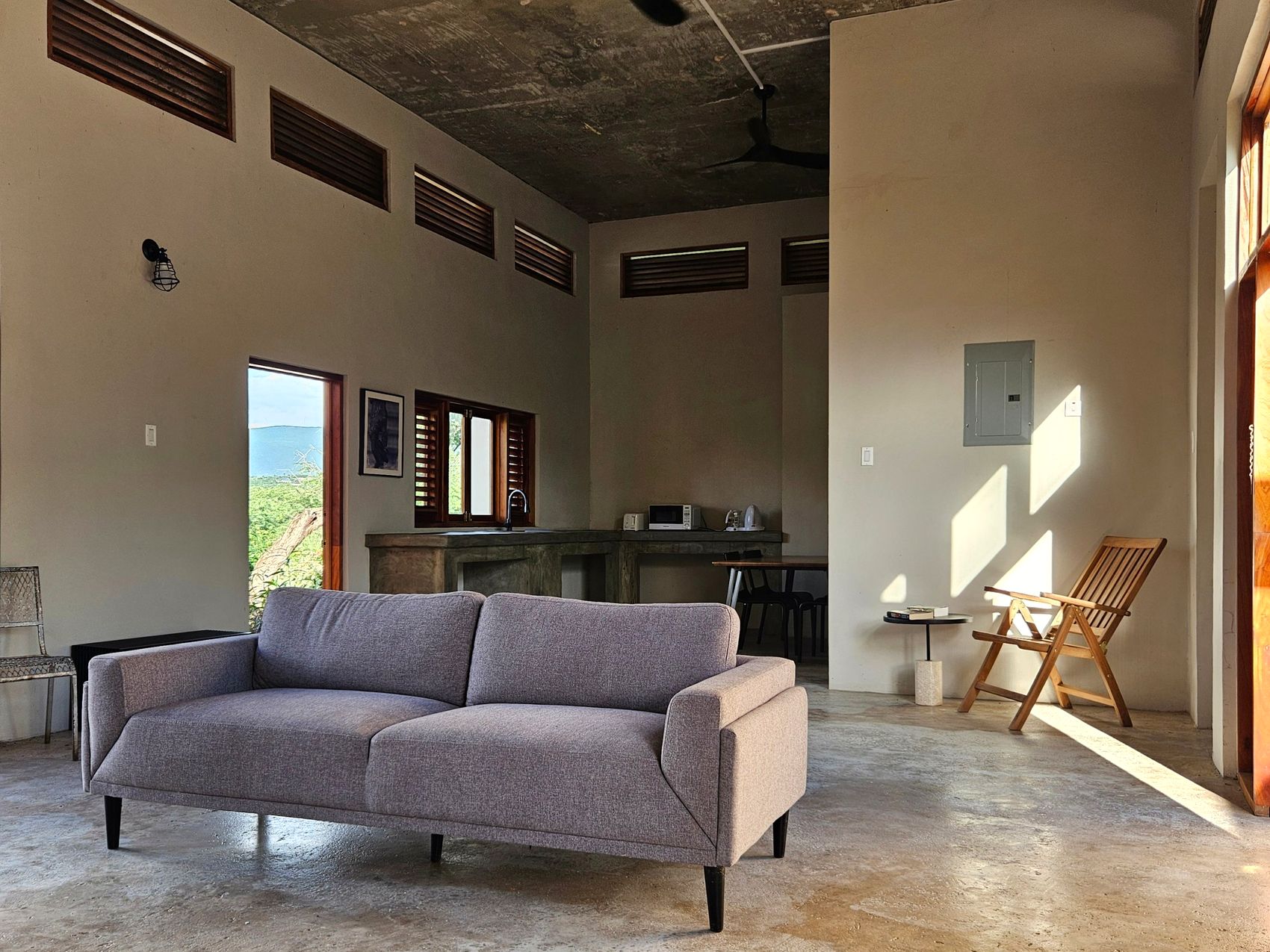
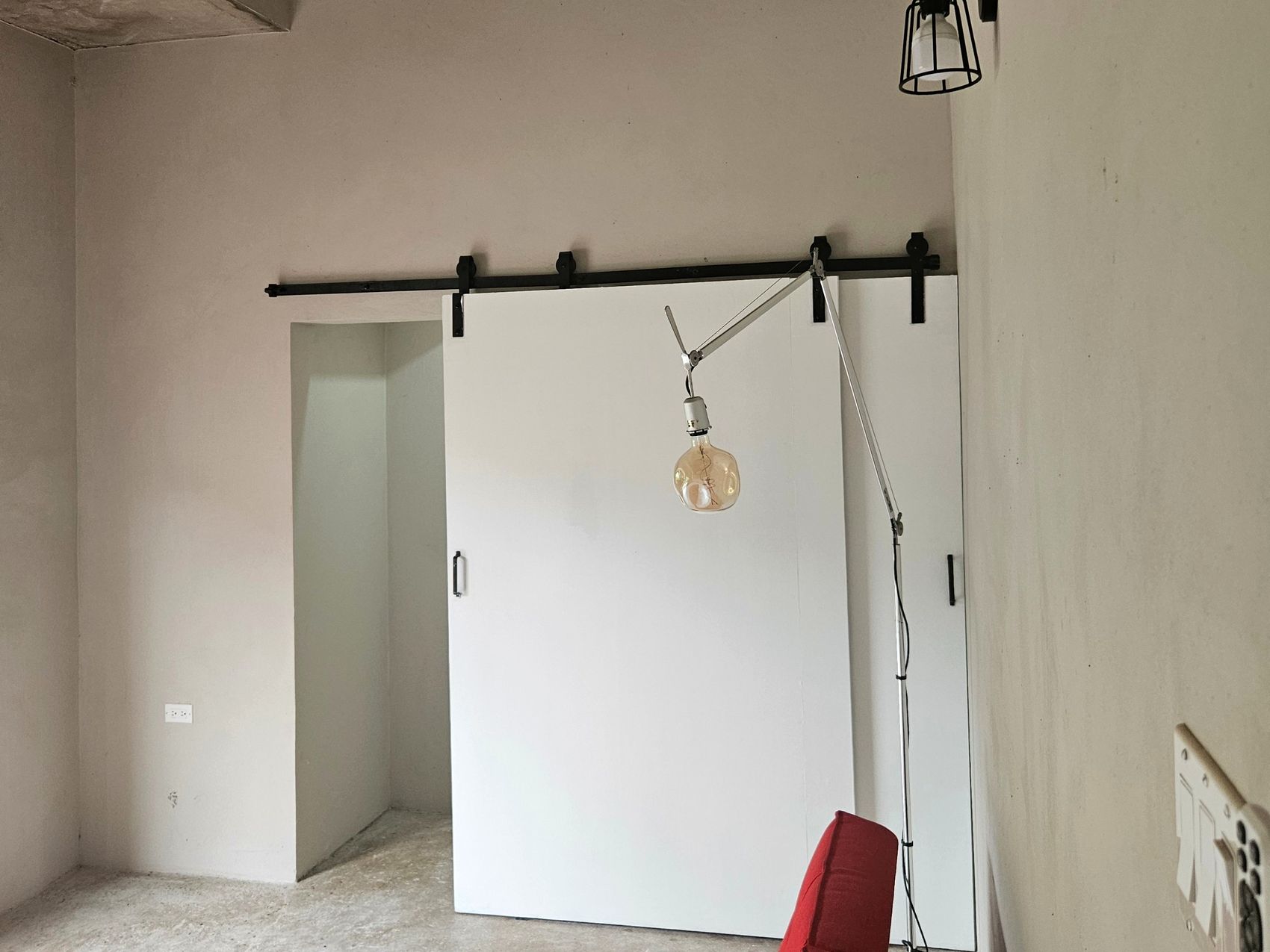
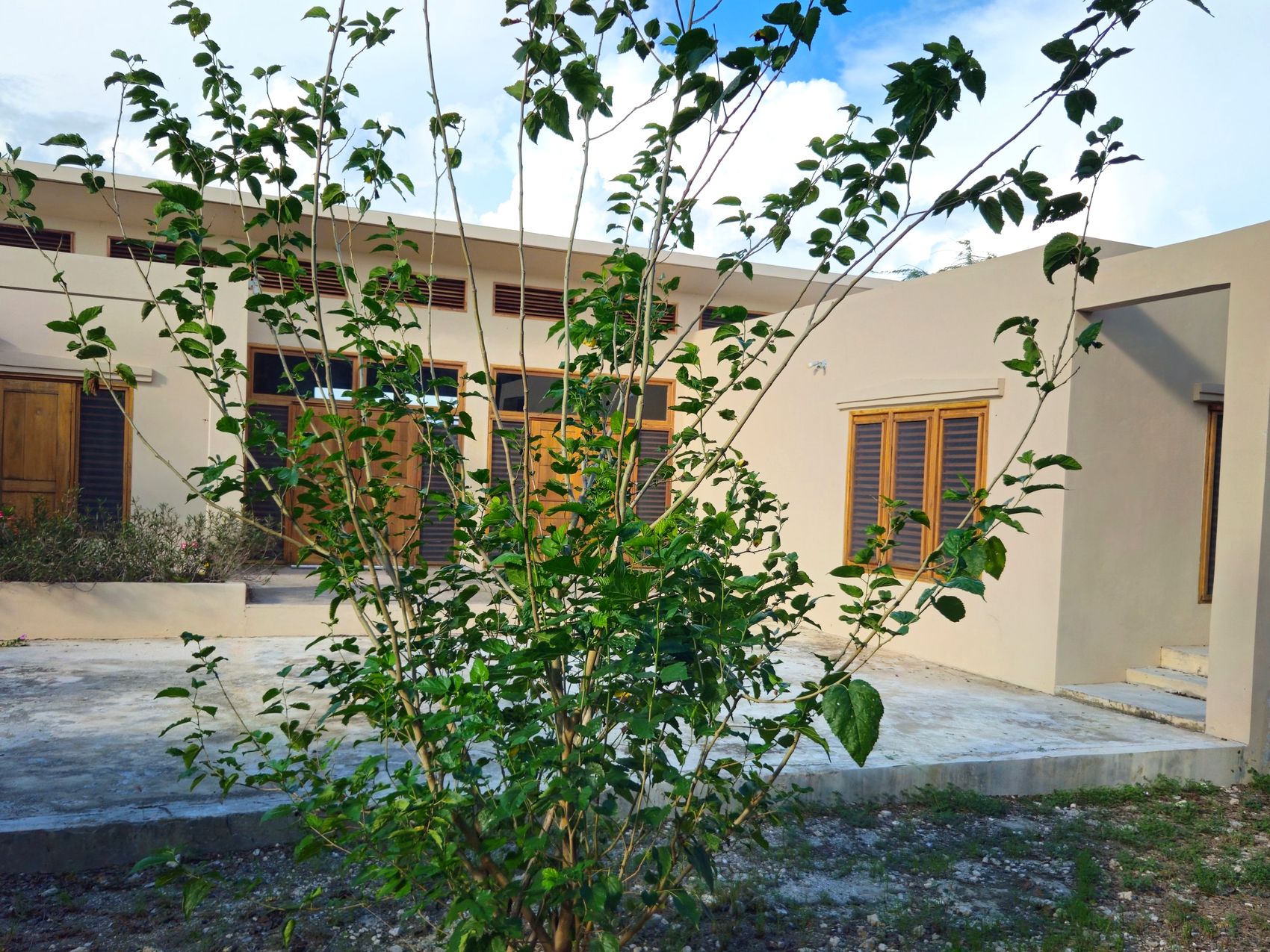
A Jamaican architect drew it, in a modern tropical idiom: one long single-storey building under a flat roof, set out so the trade wind goes through the house rather than around it. Everything inside it is the owner’s own, and the brief he set himself was to make rooms that did not argue with what was outside them.
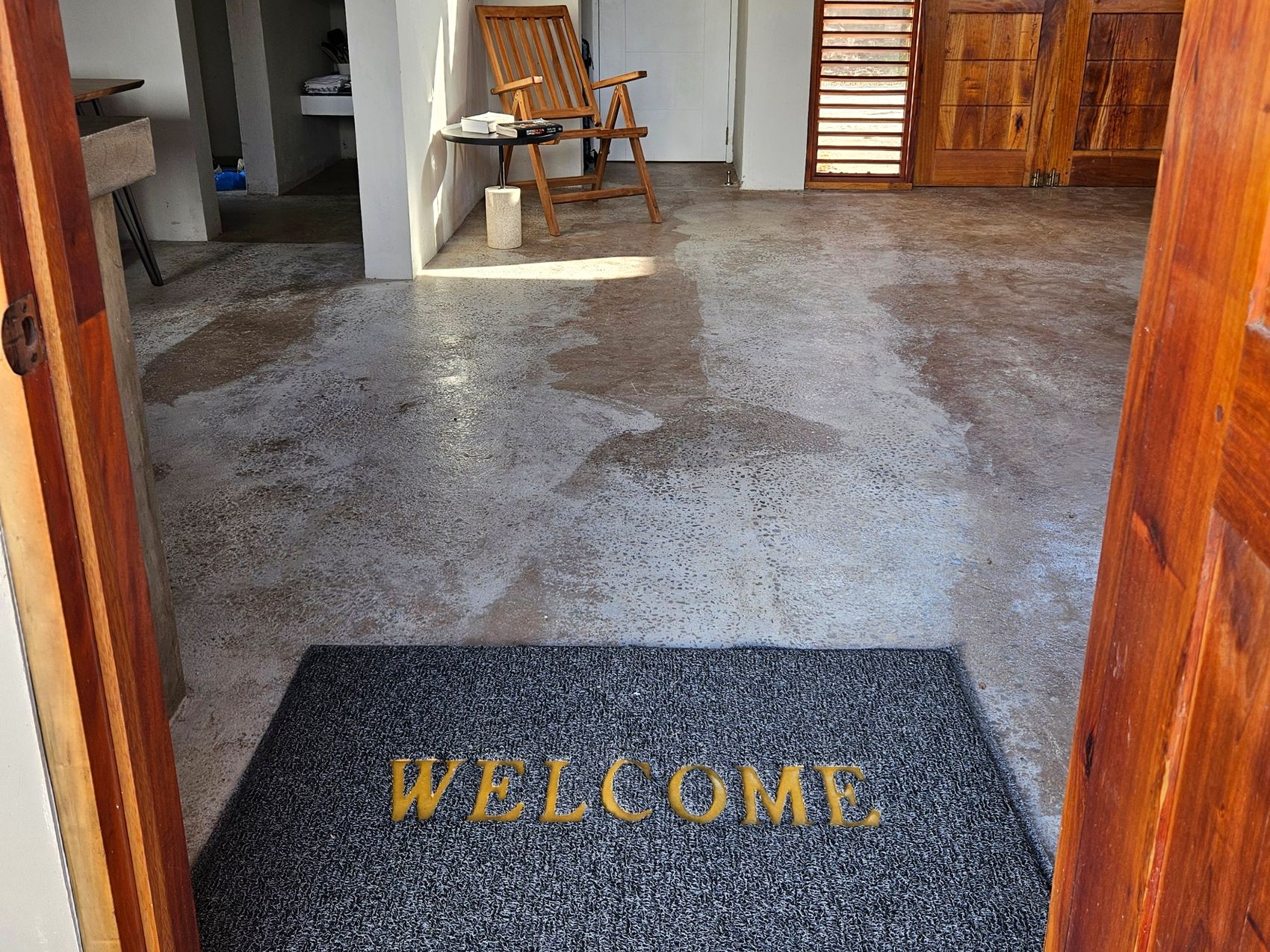
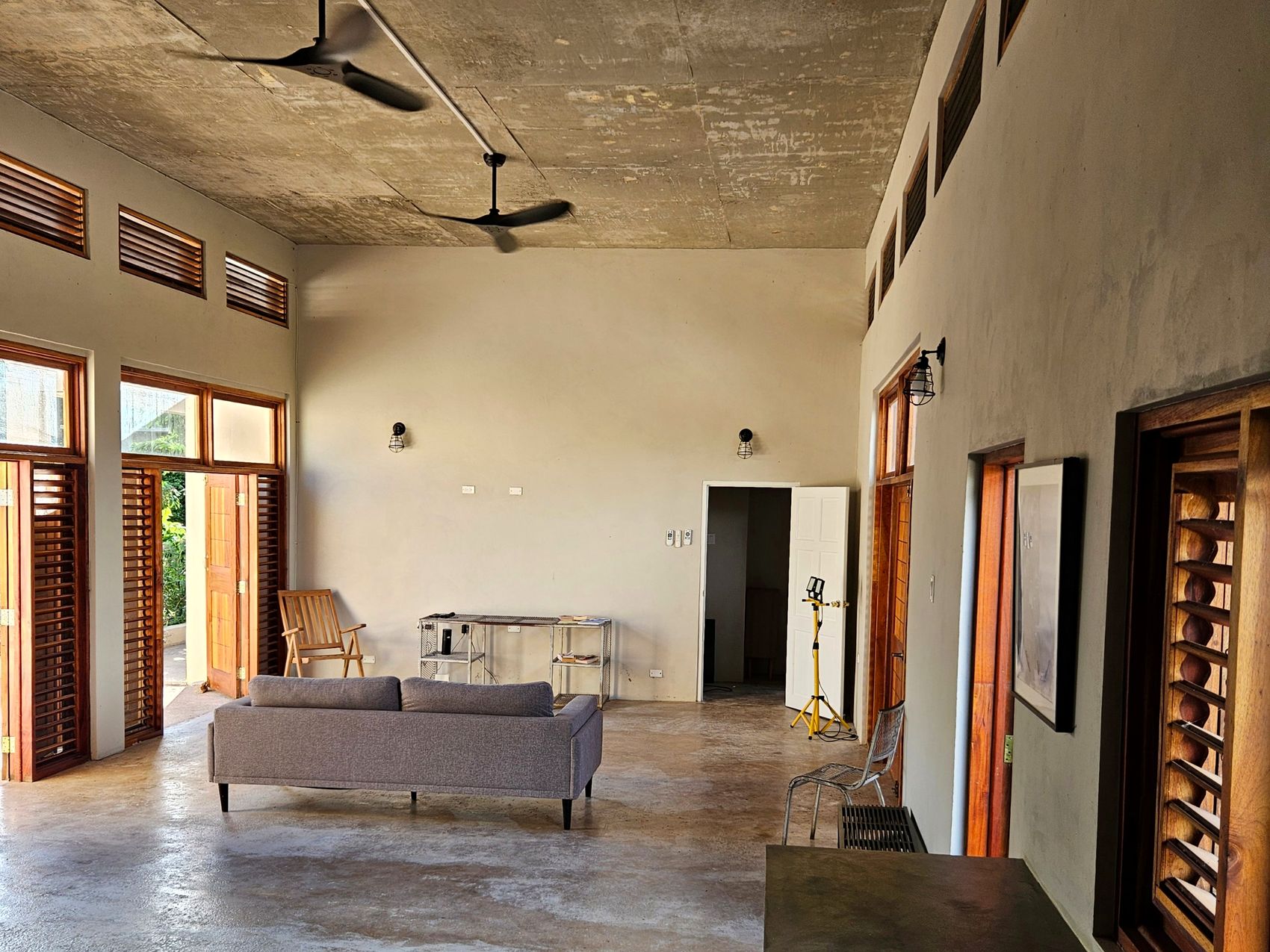
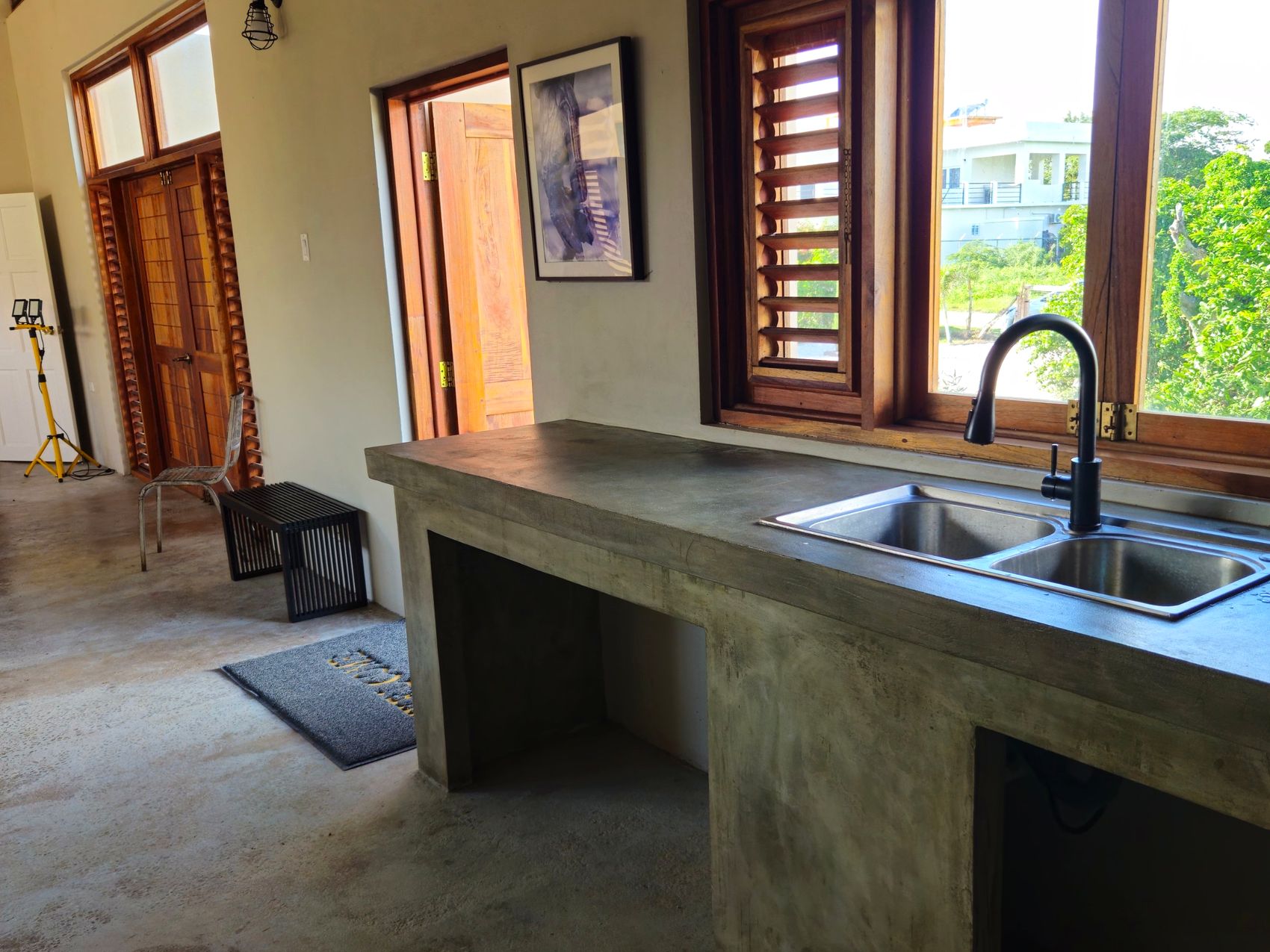
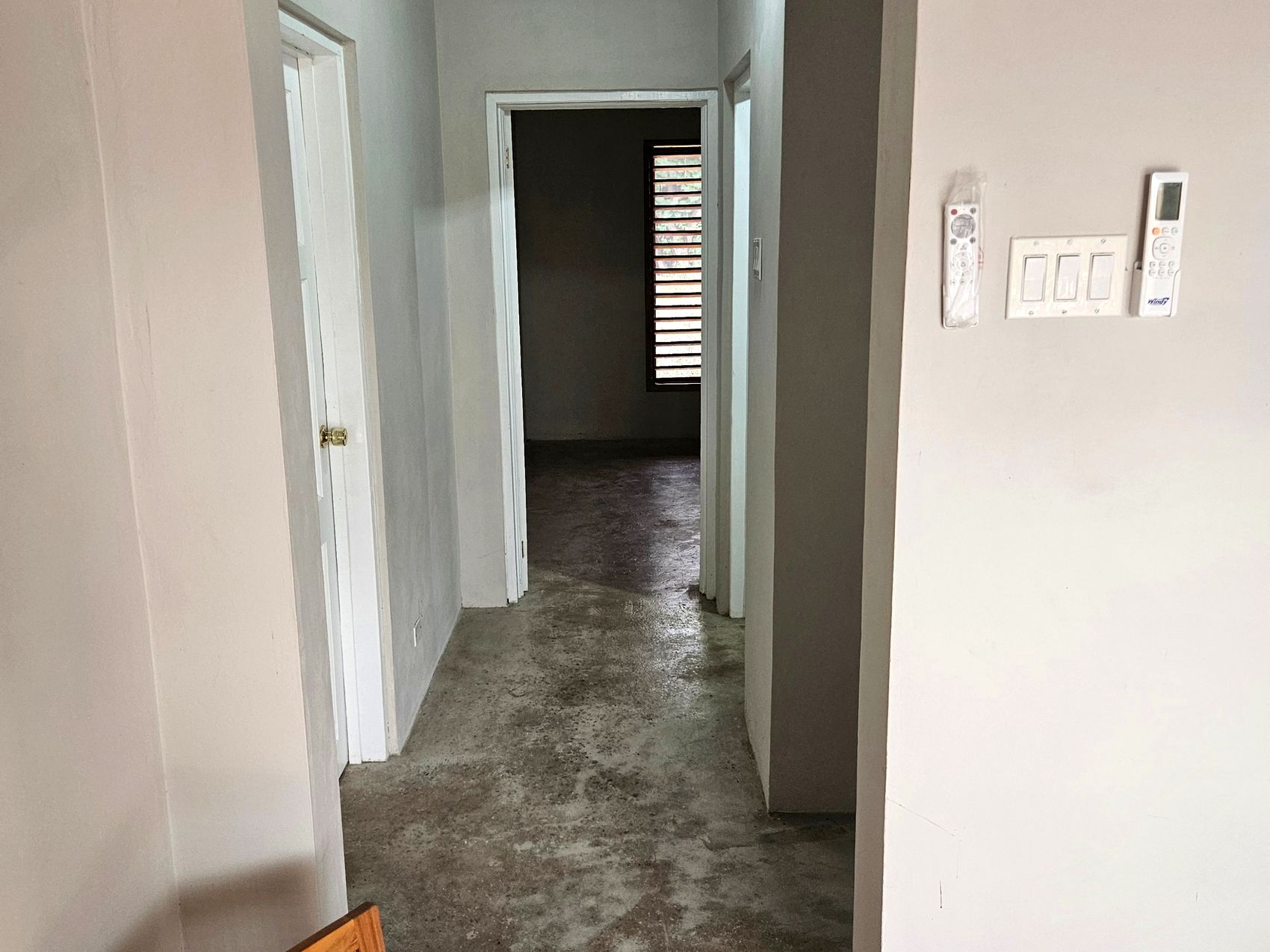
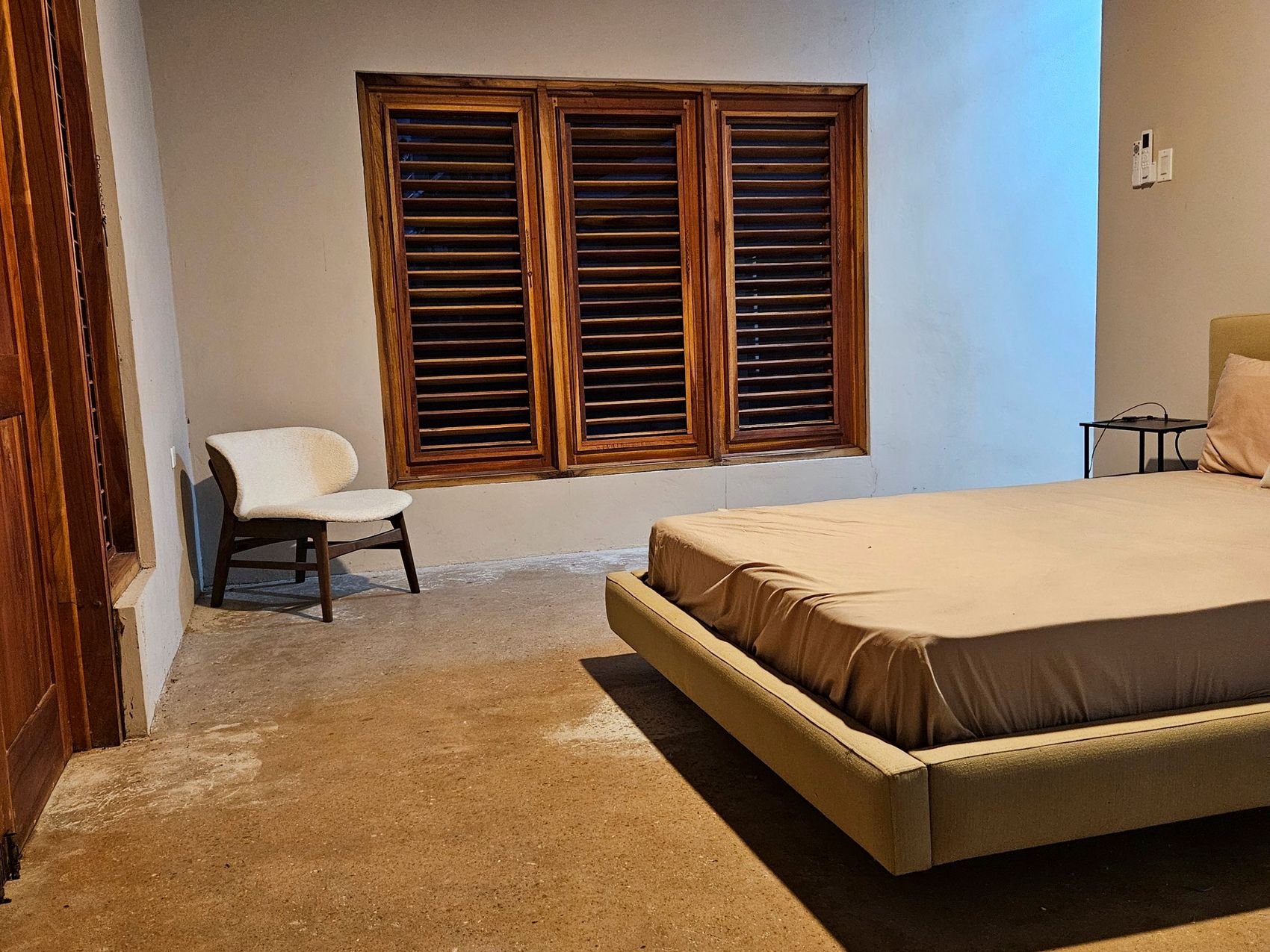
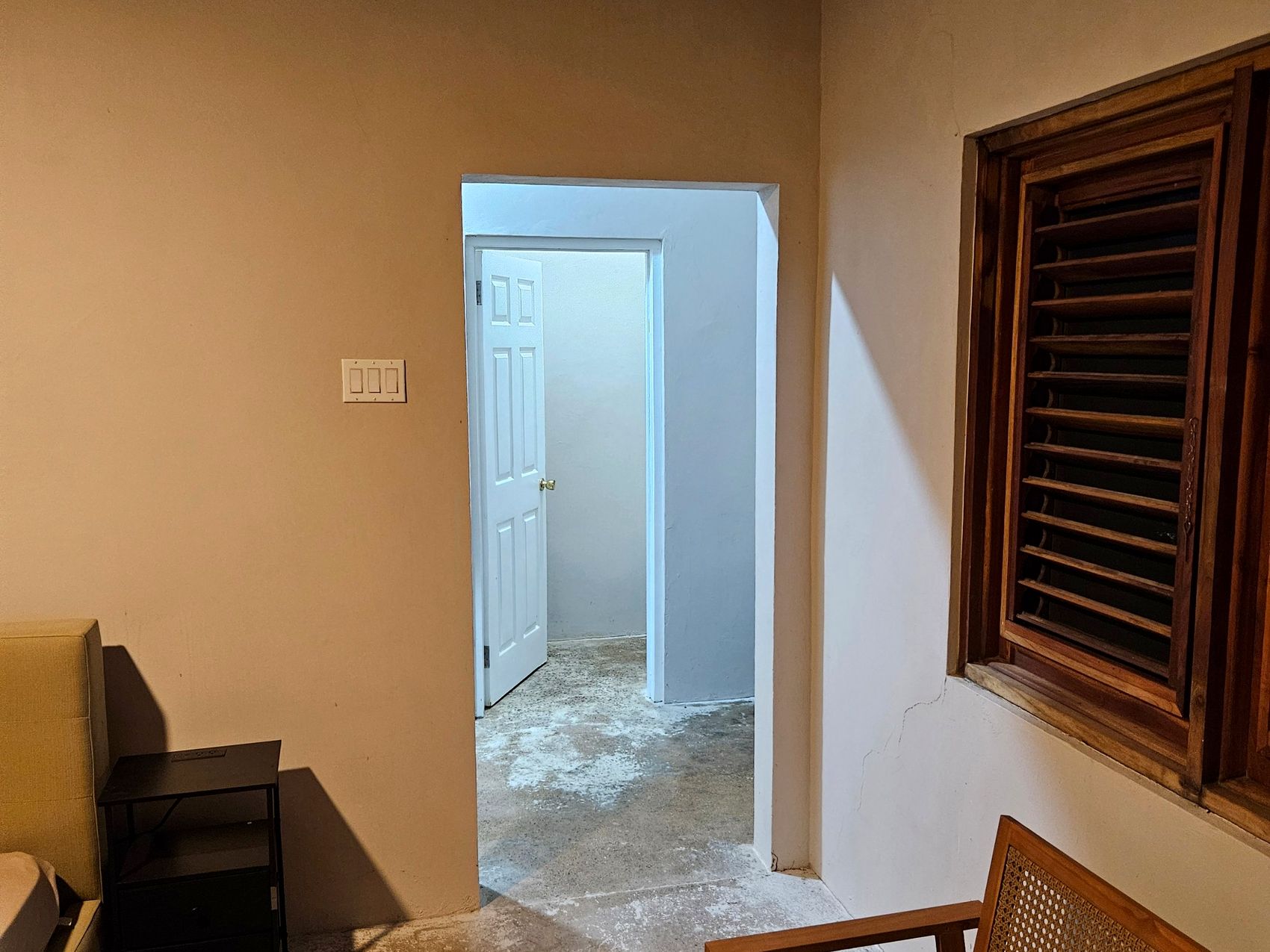
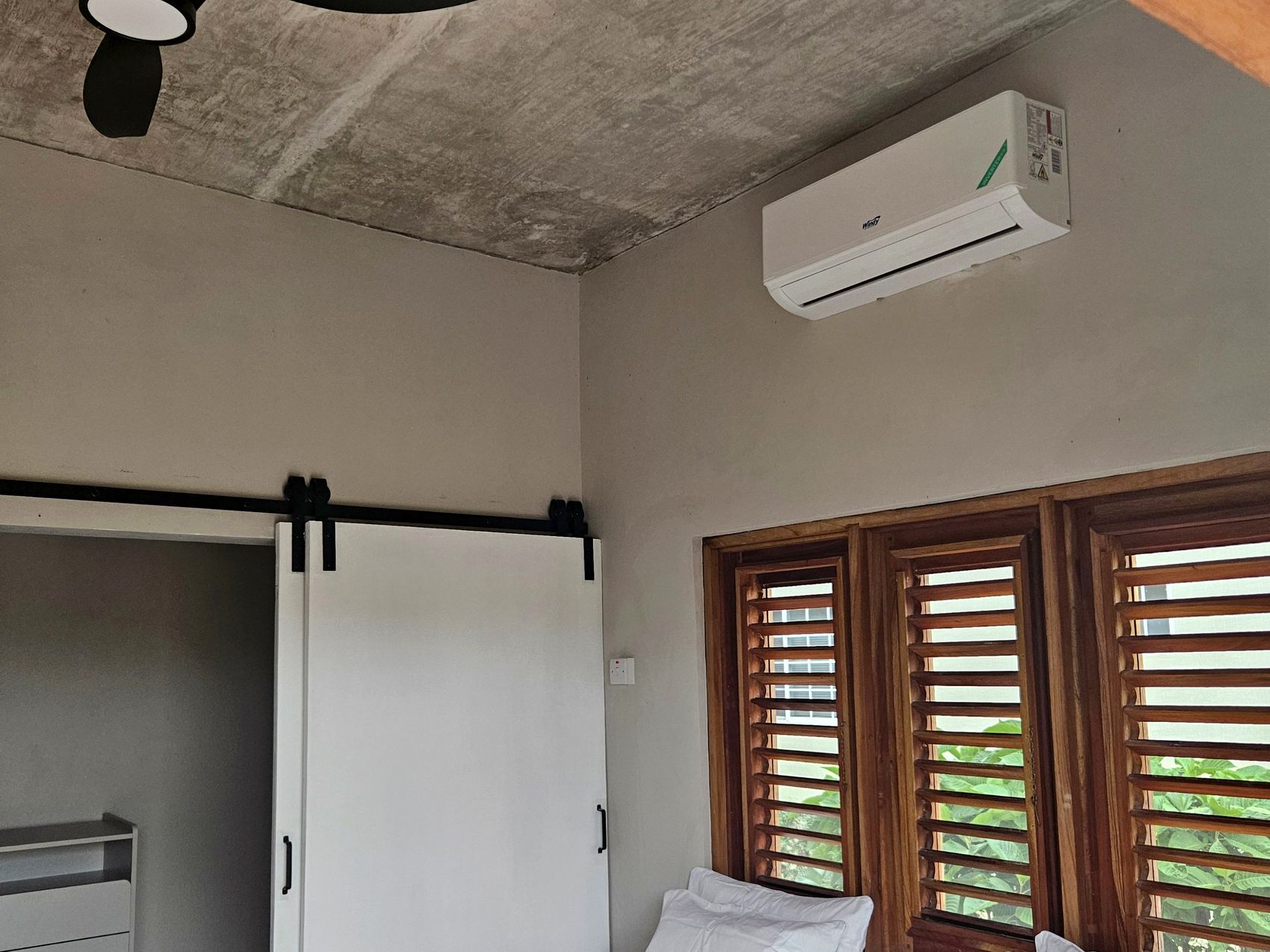
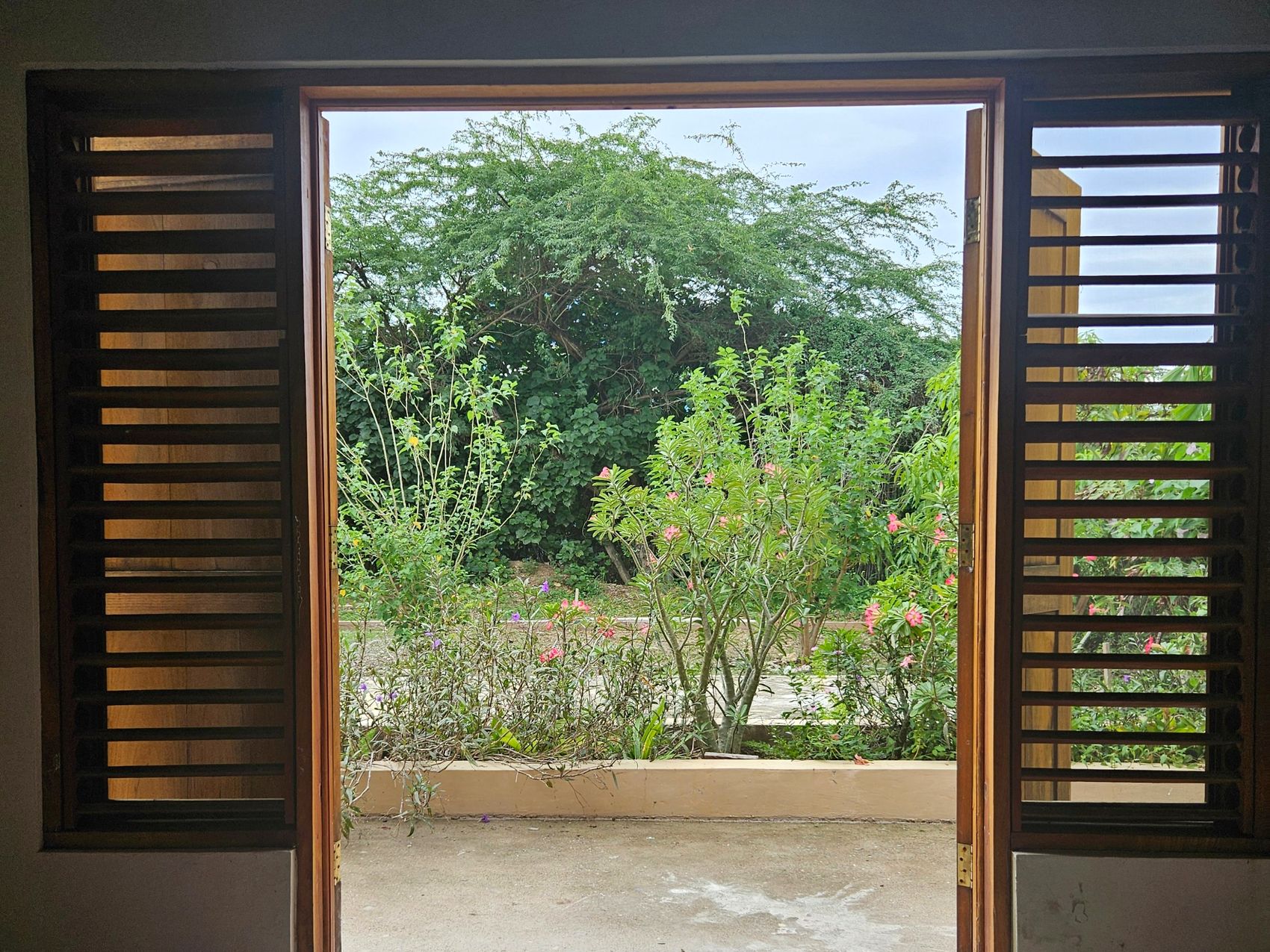
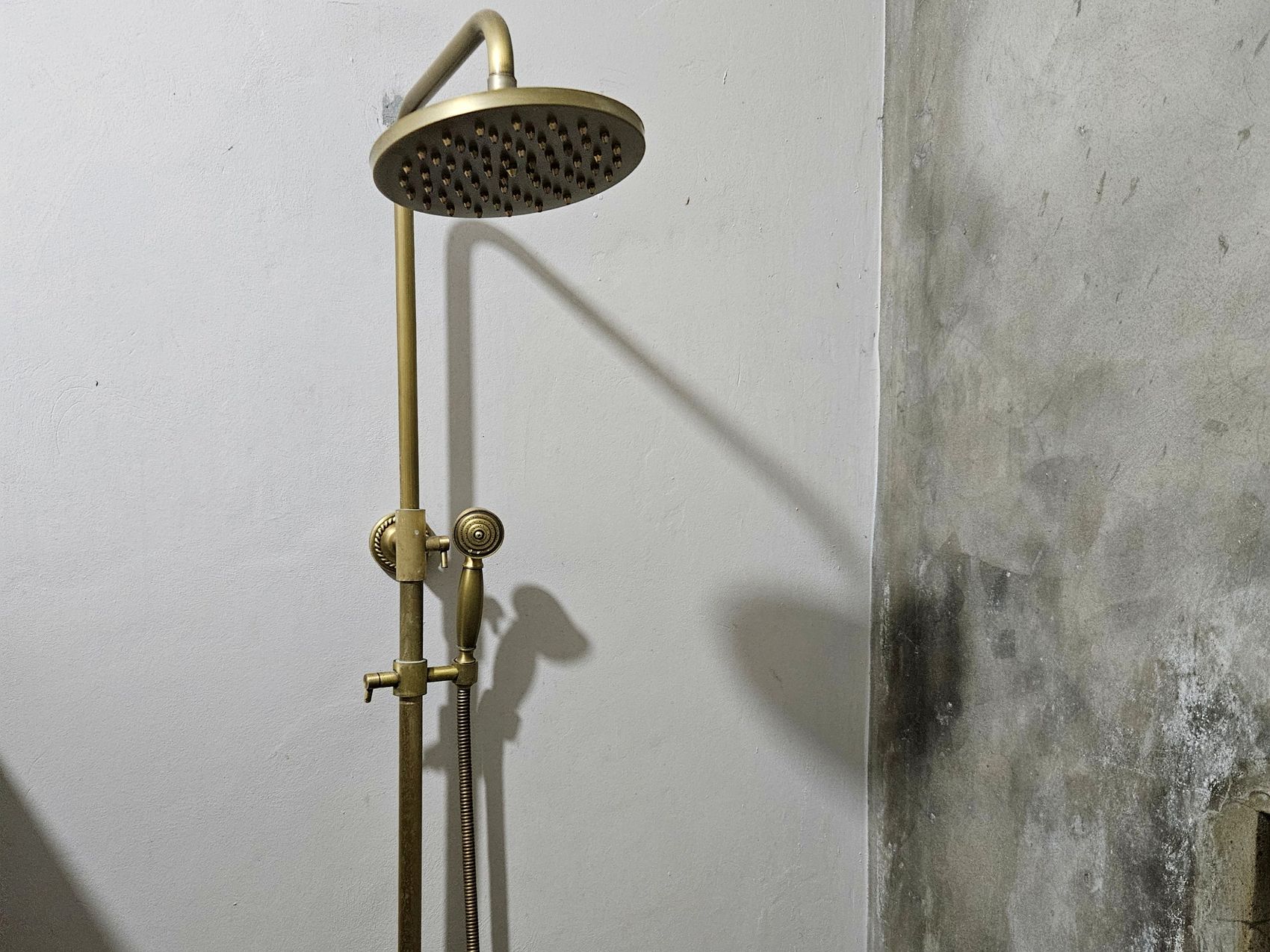
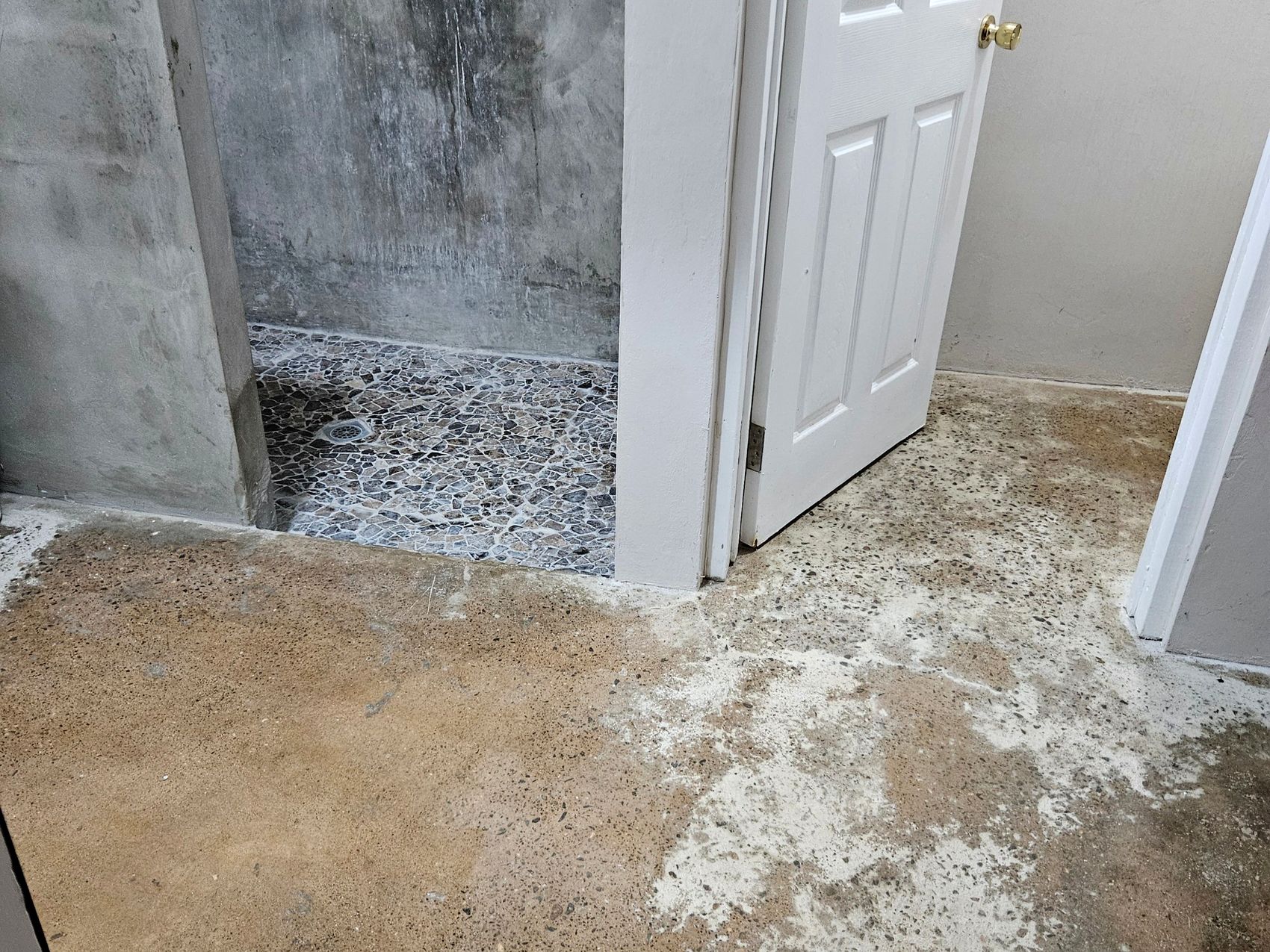
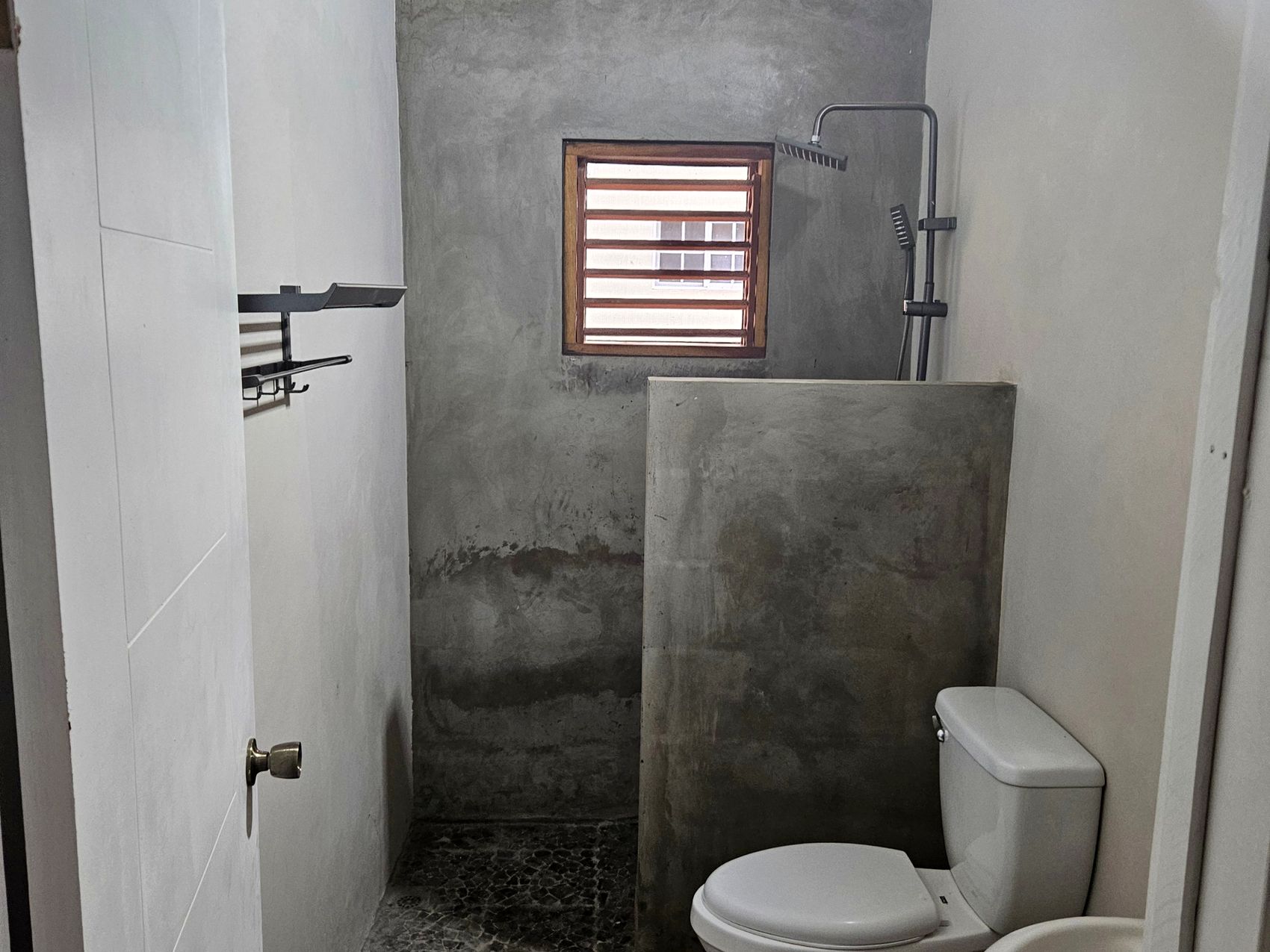
So there is no tile anywhere in the house. The floors are poured concrete, sealed, and deliberately left mottled. The doors are cedar. The windows are cedar louvres. In both bathrooms the concrete runs up the walls and is sealed the same way, which is why it looks raw and is not. The result is close to minimalist, although the honest word is empty: the whole idea was a space with nothing in it to fight, and as little furniture as a house can decently carry.
The common room is a hall. The ceiling goes up fifteen feet and cedar vents run right around the top of it, so air crosses the room all day without anything being switched on. The Santa Cruz Mountains stand in the far doorway, away to the northwest. The sea is the other way, seven minutes south on foot.
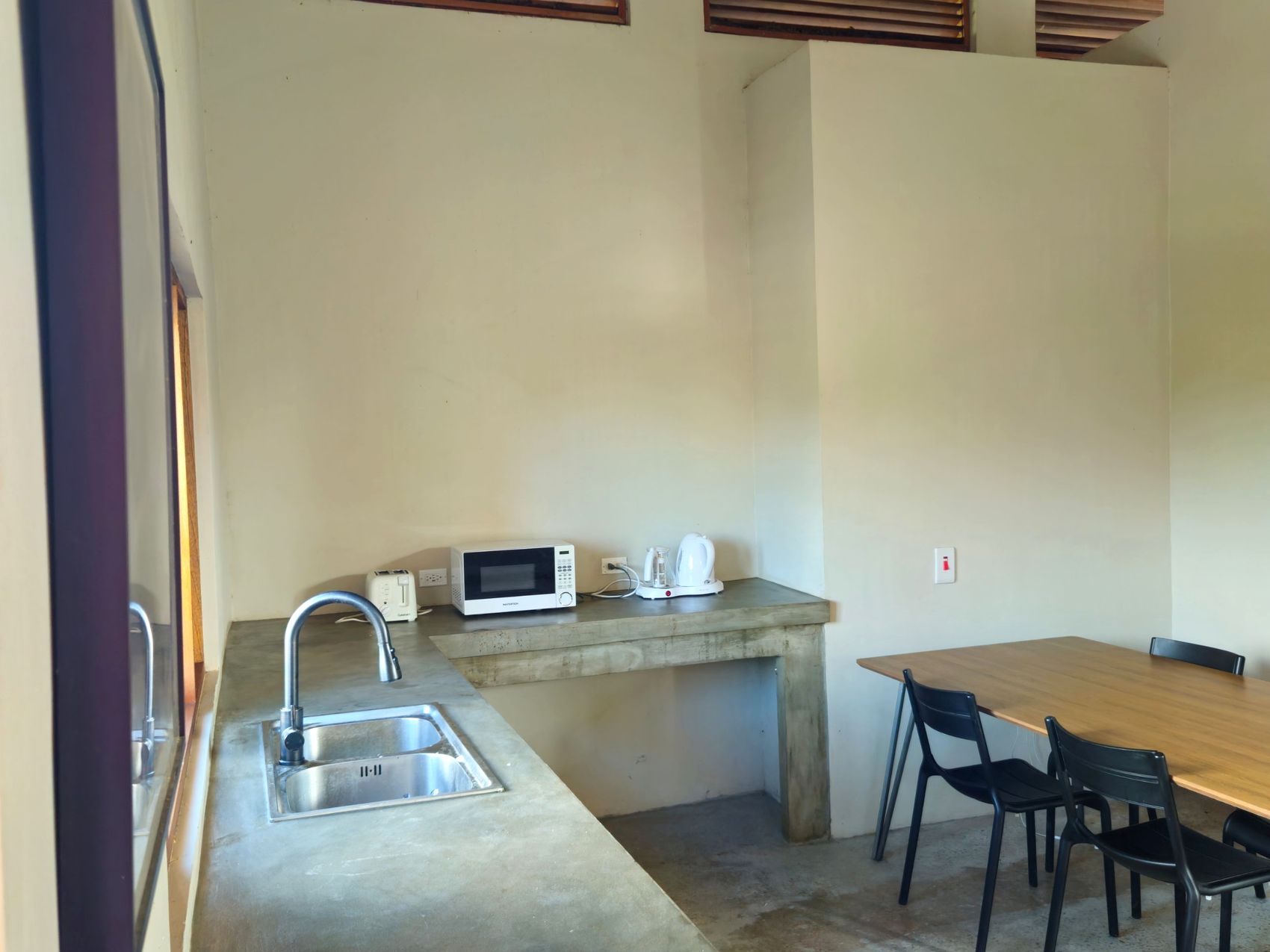
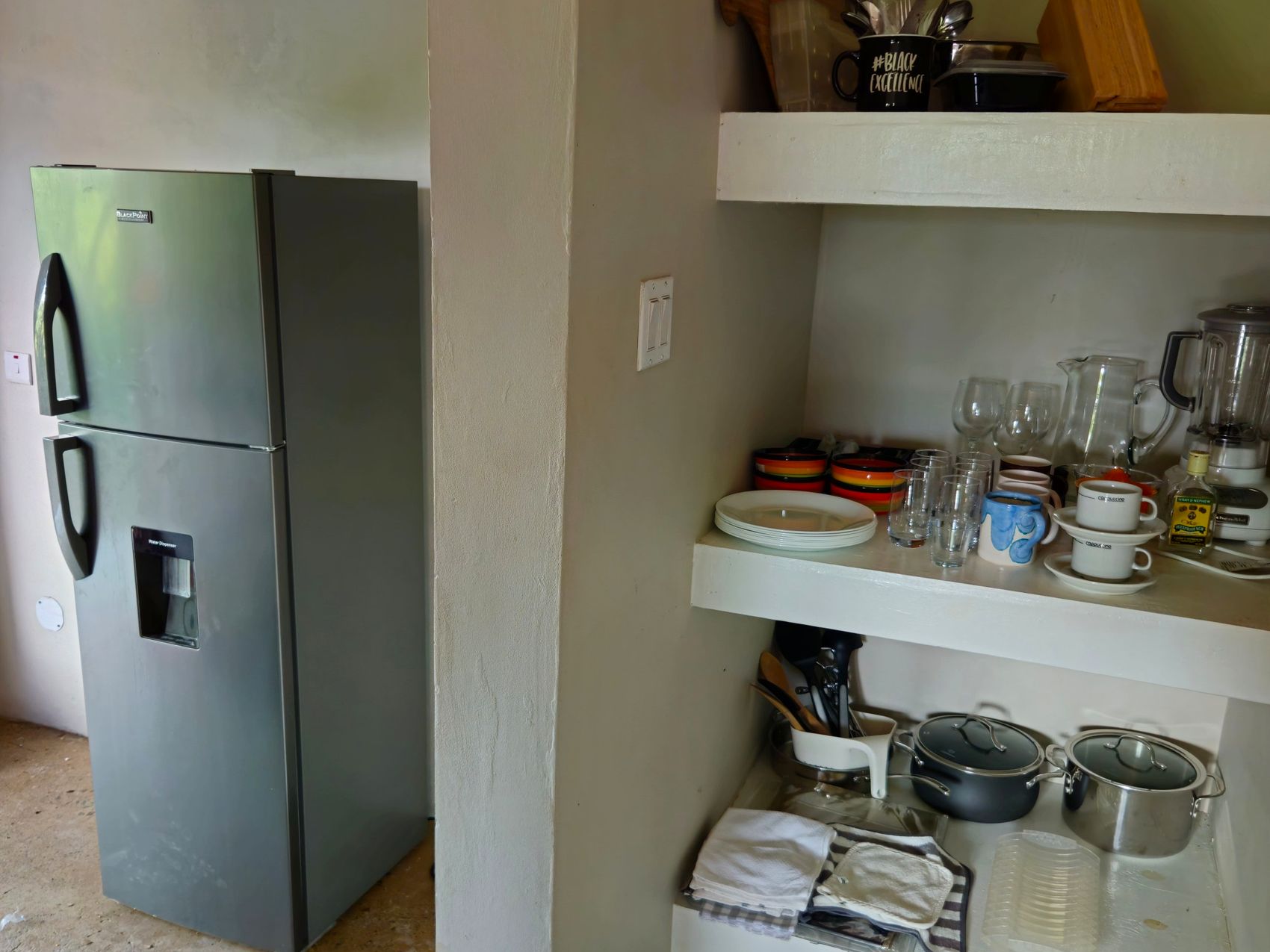
The kitchen is at one end of the hall and is split into two zones. The counter and the sink are in the room, cast in place. The fridge, the stove and everything else sit round the back, out of the visual field, so nothing in front of you suggests there is anything to be done here except relax and let the mind wander.
Three bedrooms, and each one has cedar doors onto a patio of its own. Nobody has to cross anyone else’s morning to get outside, which is why the house suits two couples as readily as it suits a family.
The bathrooms are the boldest thing in the house and that is exactly the point. Not a tile in either of them. Big shower heads, plain concrete faces, nothing standing between you and the material. It is not the bathroom you have at home and it is nothing like the bathroom in a cookie cutter villa or hotel. Stand under one of them with the louvre open and the rustic tips over into something close to supernatural.
Treasure Beach
Treasure Beach is four fishing bays on the south coast, about three hours by road from Montego Bay airport while repairs along the route last, and a little over two once the run is clear. This is the dry side of the island. The land is scrub, cactus and acacia rather than rainforest, the beaches are small and brown-gold, and the sea is usually empty.
Treasure Beach has been running its own tourism since long before anyone coined the phrase for it. The guesthouses are family owned. The boats are captained by the men who fish from them. The literary festival that fills every bed in the parish every other year was started by people who live here.
People tend to arrive having already done the other Jamaica.
A straight word about the hurricane
In October 2025 a category five hurricane crossed this coast, and St Elizabeth took the worst of it. Treasure Beach lost roofs, boats and stretches of the main road.
The house came through it with minor damage, which says something about block walls and a concrete roof slab in this part of the world.
Treasure Beach put itself back together. Guesthouses reopened through that winter, local reporting had the district at around 98 per cent restored by the spring, and the Food, Rum and Reggae Festival ran again this November.
Tourism is roughly a third of the Jamaican economy and most of the livelihood here. Turning up is the useful thing.
Staying
The house is let entire. There is no front desk, no other guests, and nobody else on the property unless you ask for them.
A caretaker lives a few minutes away, meets you at the gate, and is the person to call about anything at all. Housekeeping comes through during longer stays, and a cook can be arranged on request at extra cost.
The first chapter rate is two thirds of the high season rate that will replace it. It holds for the first twelve stays. After that the published rate applies to everyone, except the guests who came first, who keep US$300 on their next two stays booked directly with us, for stays of up to five nights, outside Christmas and New Year, Easter, the Rum and Reggae Festival and the Calabash International Literary Festival.
Rates are for the whole house, up to a maximum of six guests, and include the caretaker and wifi. Airport transfer from Montego Bay is US$100 each way and can be arranged with your booking.
Enquiries
Tell us the dates, how many of you there are, and whether you want a car or a driver. We will come back the same day.
WhatsApp is the quickest way to reach us and we answer the same day, wherever we happen to be.